Processes engineering
Quality
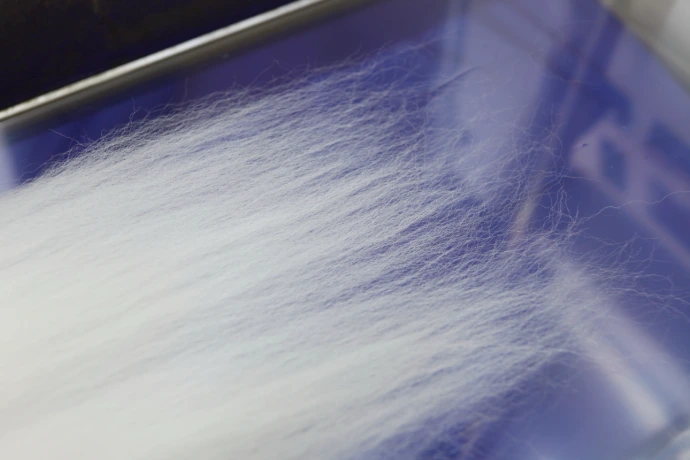
Laboratory fiber testing
Natural, or synthetic fibers are carefully selected for the rovalrolls filling materials acccording to criteria such as morphology, molecular weight, breaking strength etc.
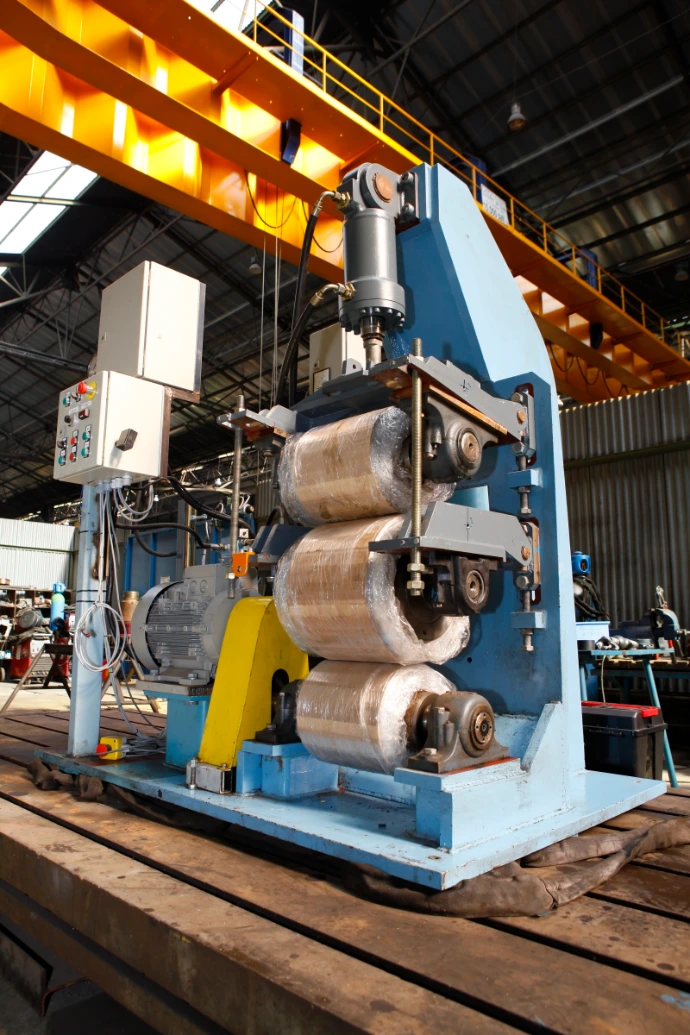
Pilot calender (400 KN/m, 30 Hertz) enables the testing and validation of the selected fibers.
The fiber raw materials are validated and contolled on state of the art test equipment in the Roval laboratory : fiber morphology in terms of length, width and specific weight ; length of cellulose chain / degree of polymerisation, mechanical strength properties of fibers.
Filling control
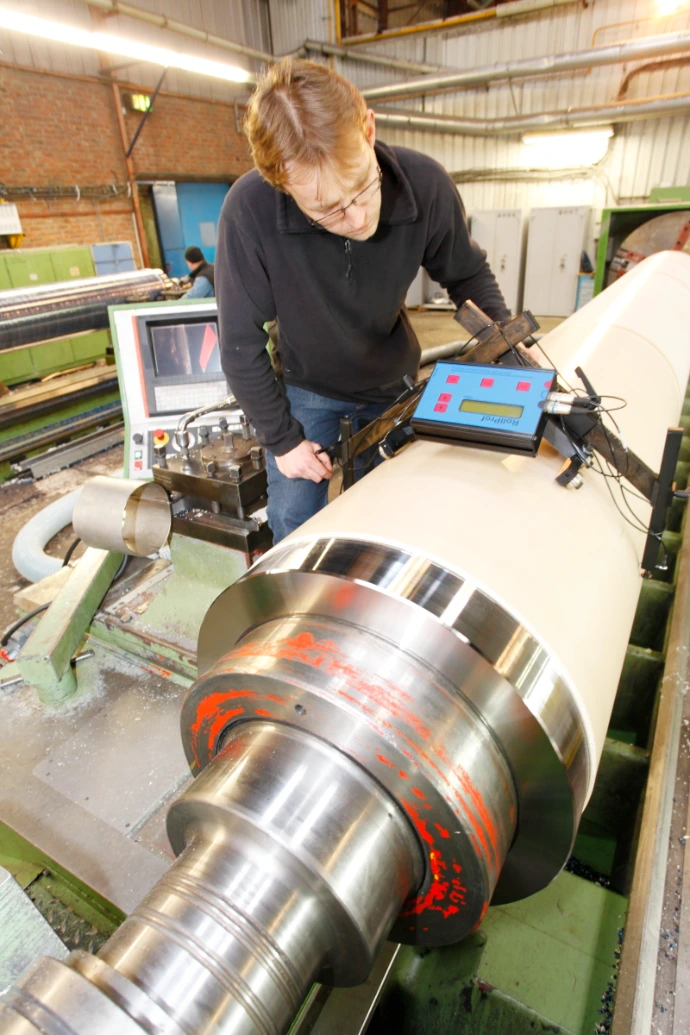
Process parameters such as cover material moisture content, interference fit and density are calculated according to the cover material properties and the calender running conditions. These key parameters are continually controlled throughout the production process, allowing instant correction of any out of tolerance. In this way the filled roll is guaranteed without defect, and the uniformity of the linear load profile in the calender nip is assured.
The initial fiber selection and control in the laboratory is critical to maximise the performance of the cover. This approach, which is identical for all rovalrolls covers, ensures the identical performance of every cover and helps to maintain the consistency of your calendering process.
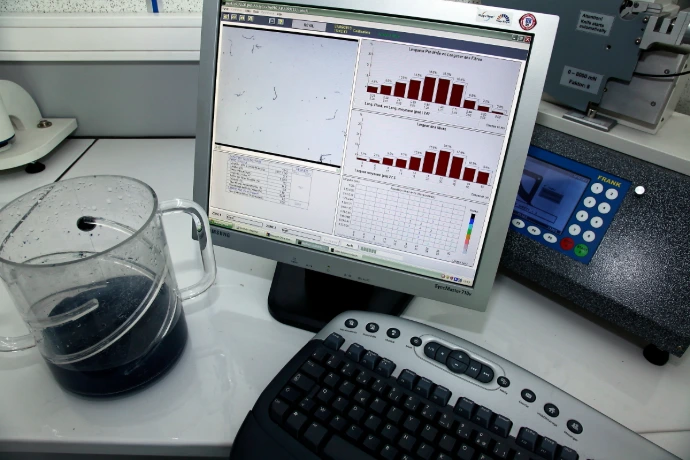
Research & Development Lab
A laboratory equipped with state-of-the-art equipment.
This activity is central to innovation, continuous quality improvement, and the expansion of rovalrolls’ compressed fiber coating technologies.
Continuous monitoring of fibrous raw materials upon receipt and during use.
Pilot calender
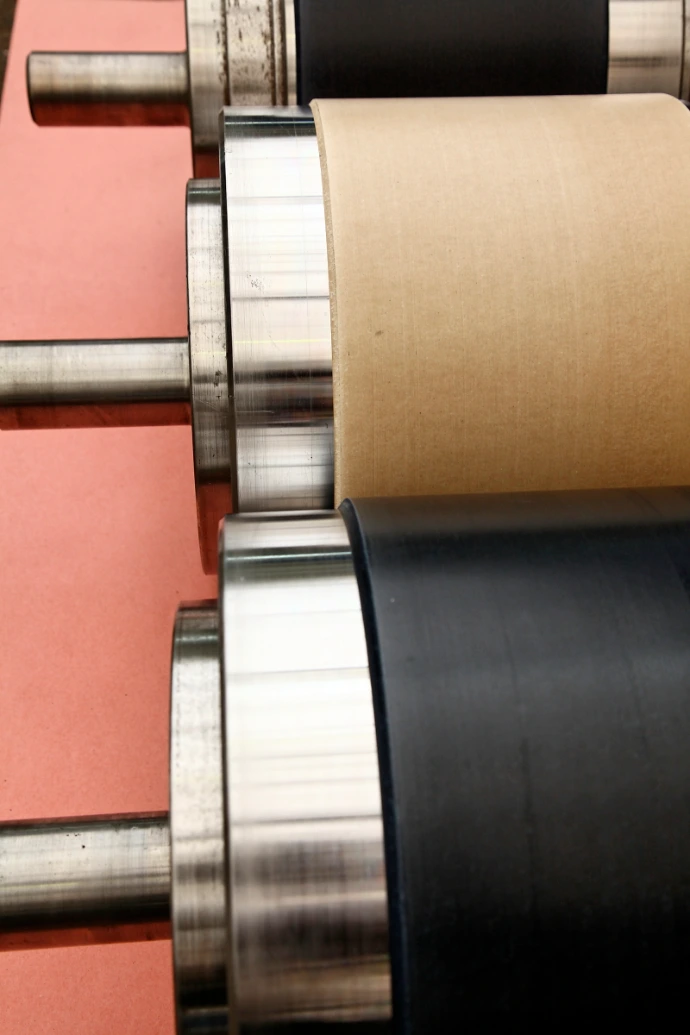
The 3-roll pilot calender :
- 30 Hz
- 400 kN/m
- 400 mm width
makes it possible to define the maximum stresses under which the various types of rovalrolls coverings operate.
Engineering
Application in calendering
A precise understanding of the specific operating conditions of each calendering process, combined with a wide range of rovalrolls coverings (hardness 70–90° Shore D, elastic modulus 1–6 GPa, glass transition temperature up to 130 °C), makes it possible to equip calenders to meet very diverse requirements.

Special papers
Their highly demanding calenders require coverings with specific hysteresis and glass transition temperature characteristics.
Magazine papers
Their calendering requires opposing properties between the calendered paper and the compressed-fibre covering — plasticity for the paper and elasticity for the covering.
Embossing
requires coatings with contrasting properties — for example, the ability to retain the embossed relief on the calenders while at the same time resisting accidental impacts.
The gloss of the calendered fabric
calls for extremely compressible coatings that maximise the mirror effect, i.e. the transfer of the heated, polished metallic surface onto the fabric.
Technical operations
A calender measurement service (nip impressions, steel/cover temperature profiling with handheld or installed infrared cameras, vibration analyses) combined with exchanges between machine operators and rovalrolls allows selecting the most suitable coating for your calender.
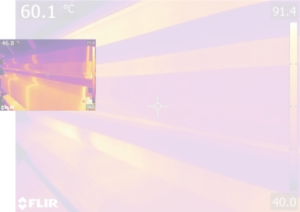
Temperature Profiling
Temperature profile on elastic presses using handheld and/or installed IR cameras, and on steel presses using flush thermocouples.
Vibration analyses
Vibration analyses, combined with engineering recommendations for compressed-fiber roll technology, reduce vibration amplitudes and extend coating lifetime.
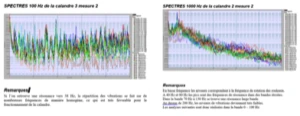
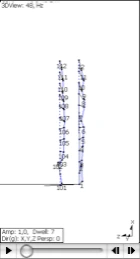 Determination of calender and roll movements through vibration analysis.
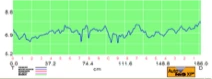
Pressure Profiling
Crosswise pressure profiles determined via dynamic and static colorimetric nip impressions (10 m/min), including calculation of camber corrections.
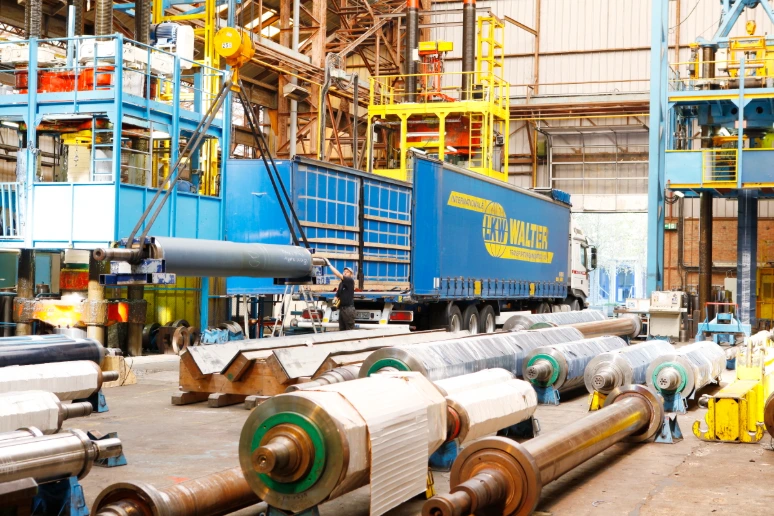
Factory
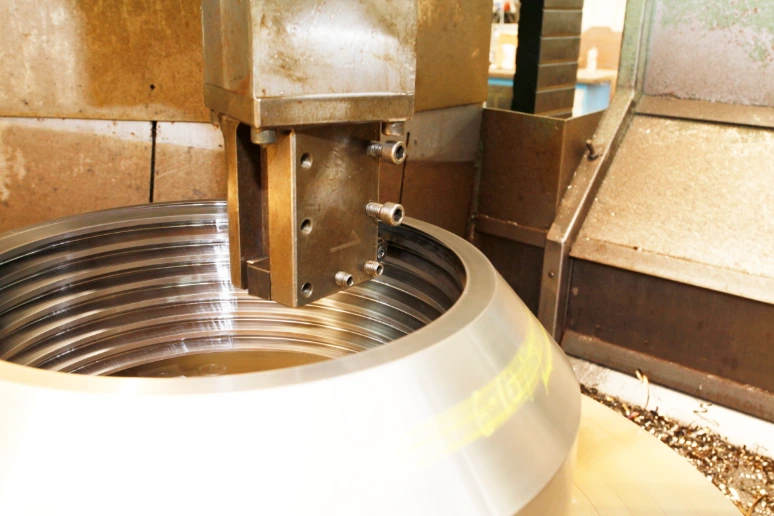
New nut machining
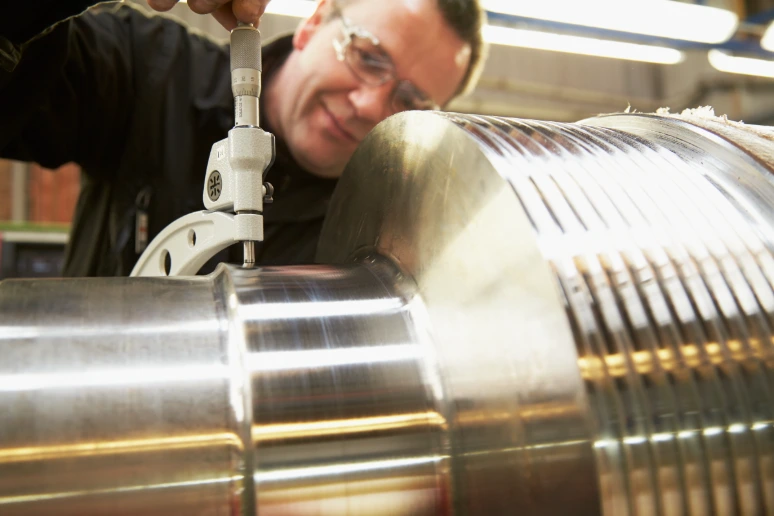
New shaft machining

Cotton fiber storage
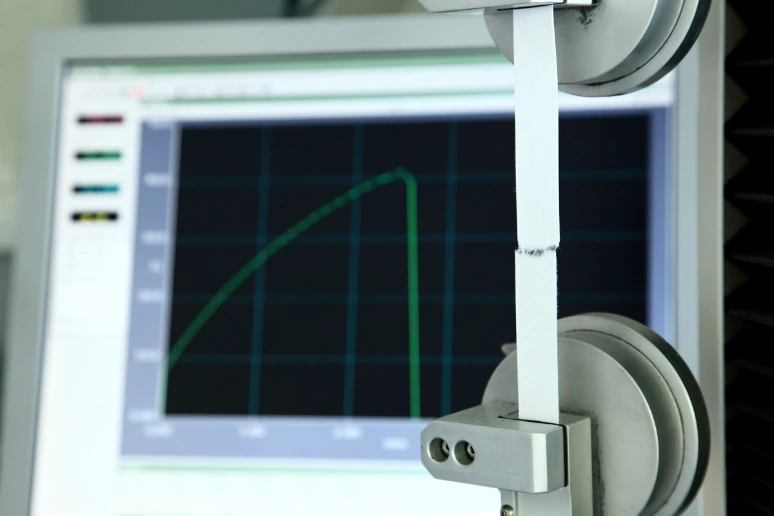
Quality control laboratory
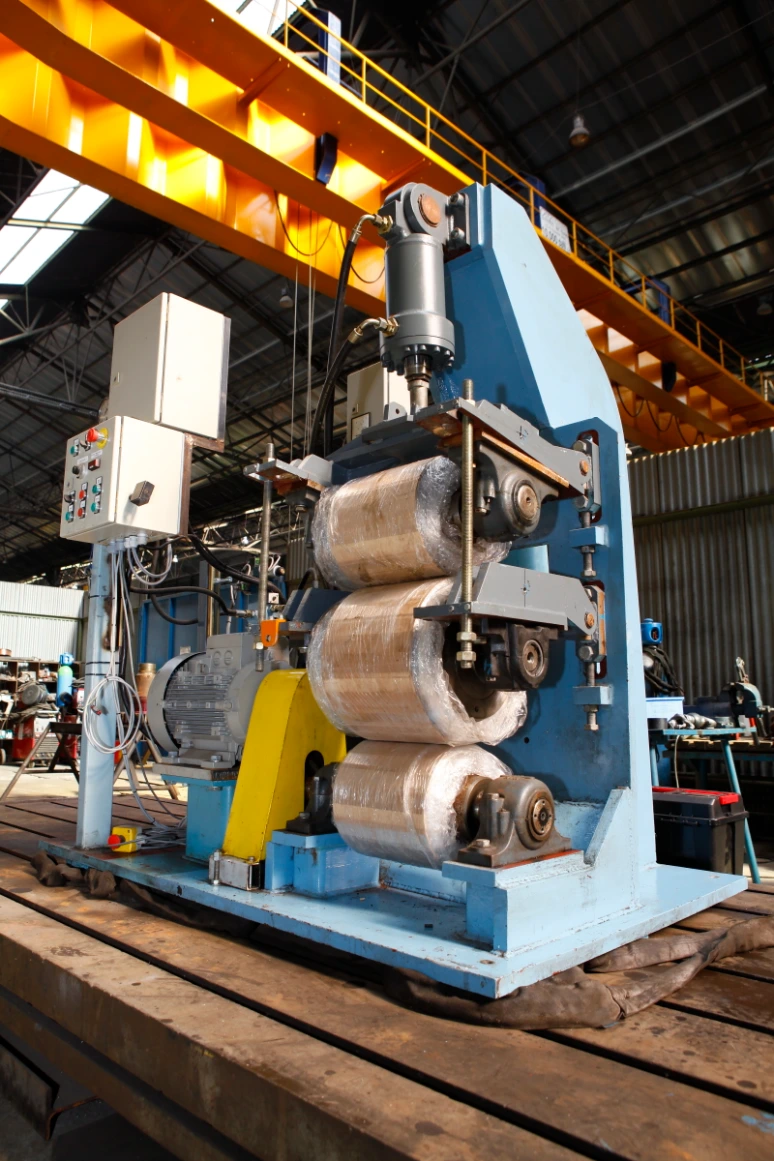
Pilot calender
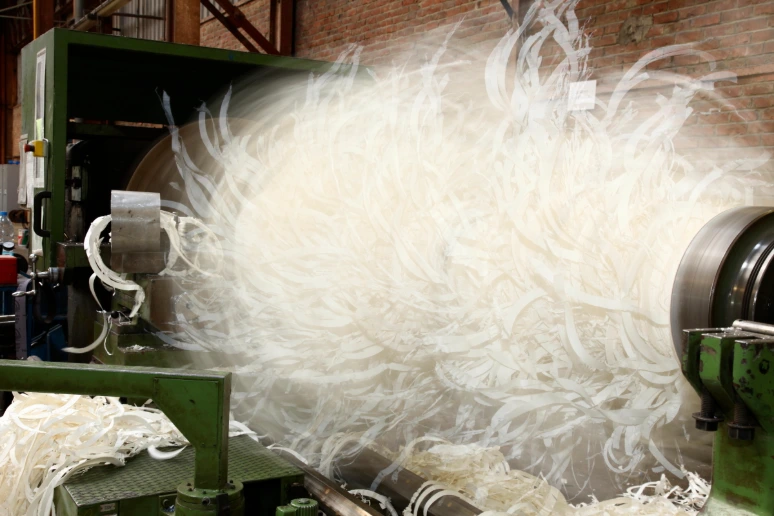
Cover stripping
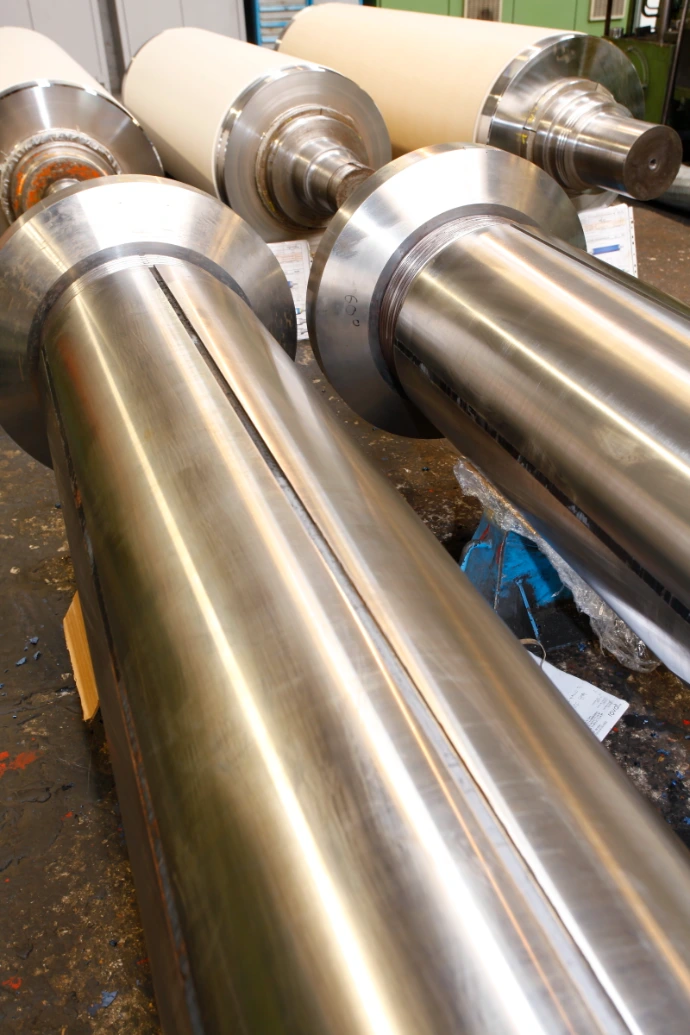
Metal polishing
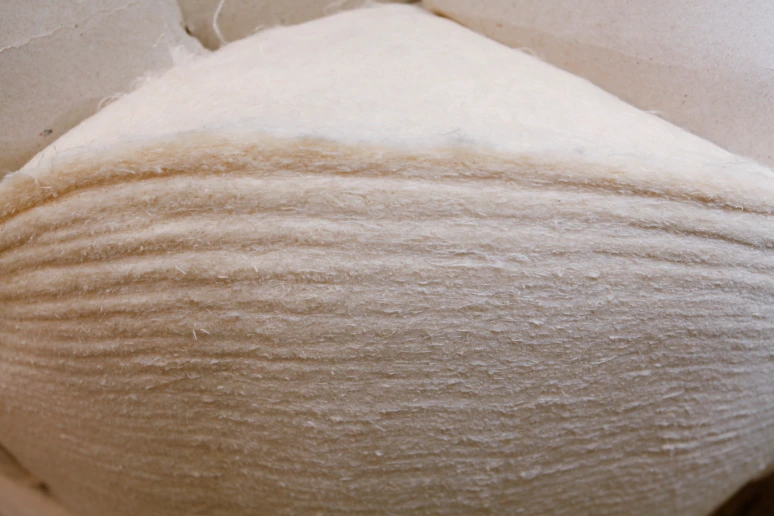
Cotton disc preparation
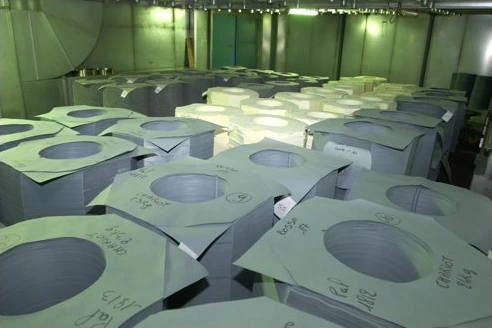
Drying
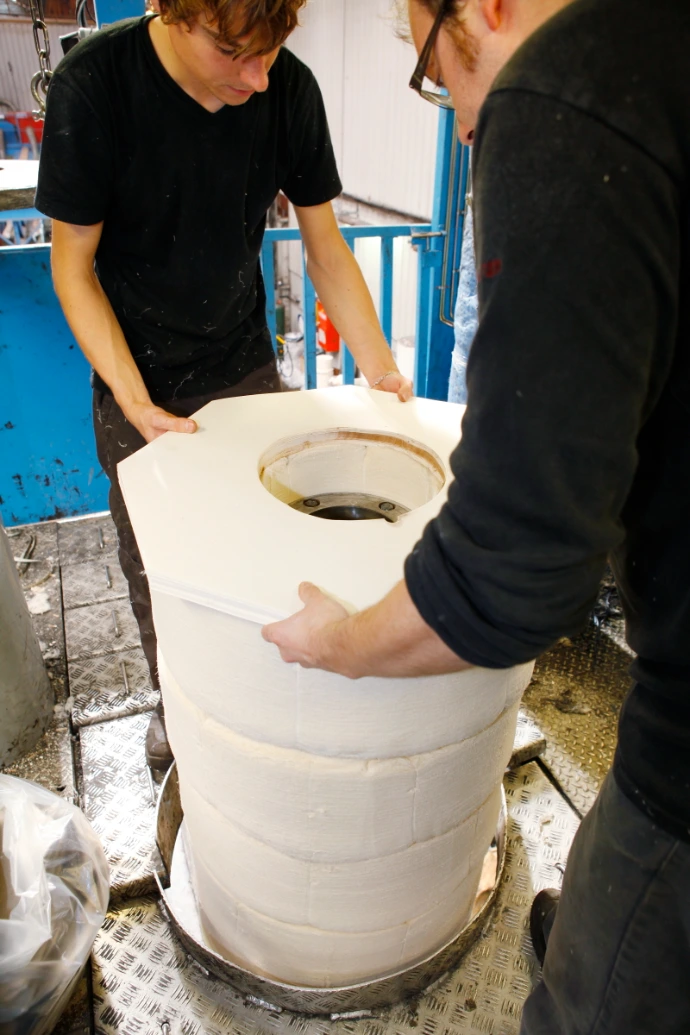
Roll filling
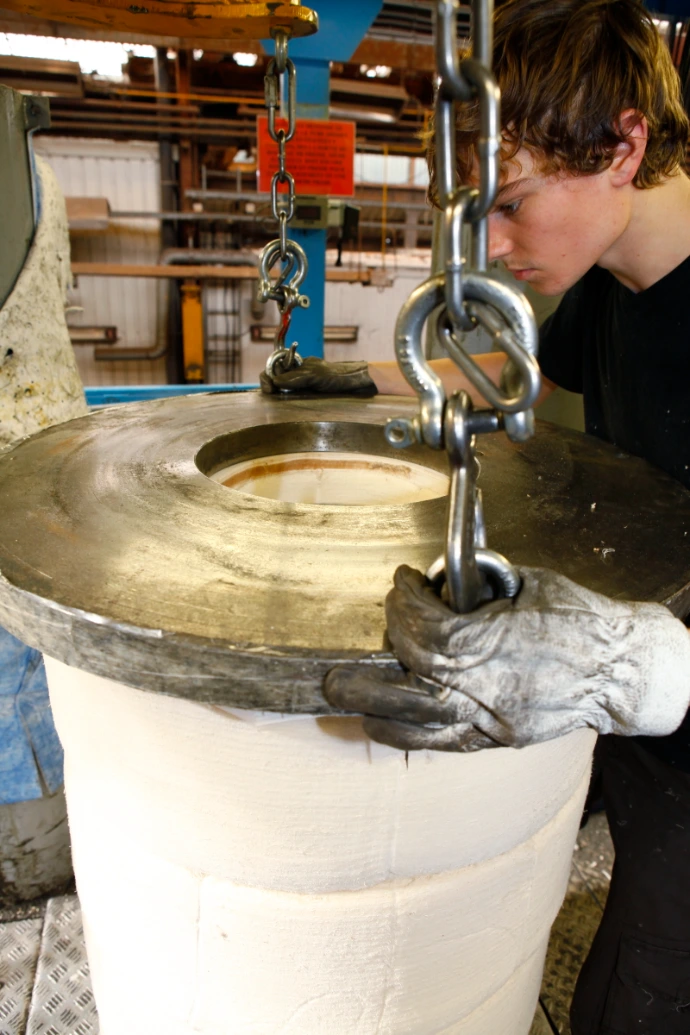
Locking
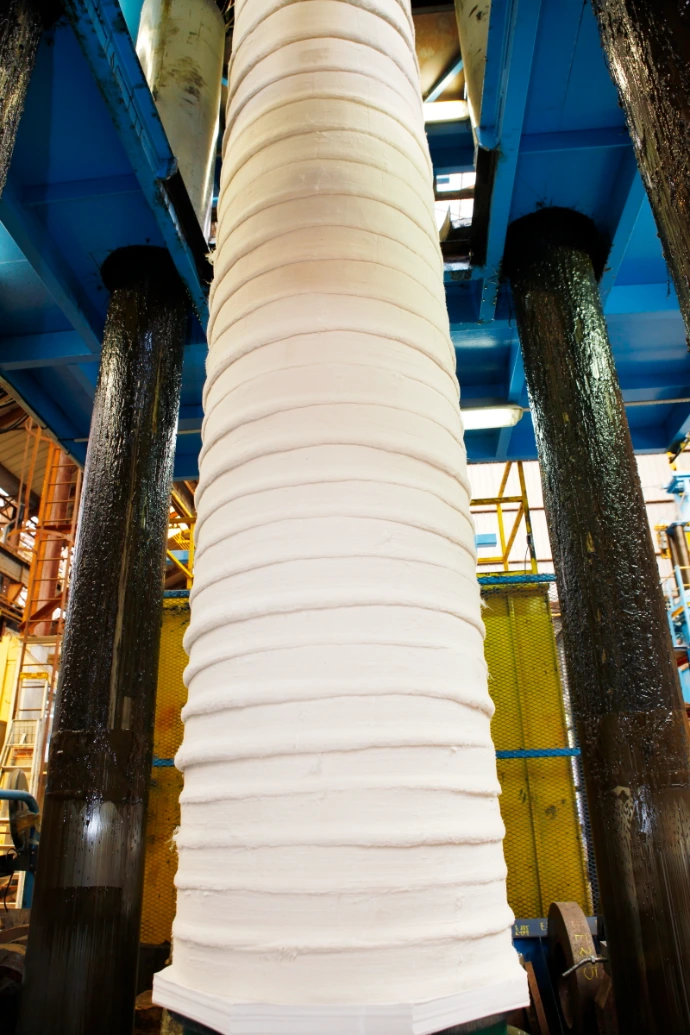
Compacting
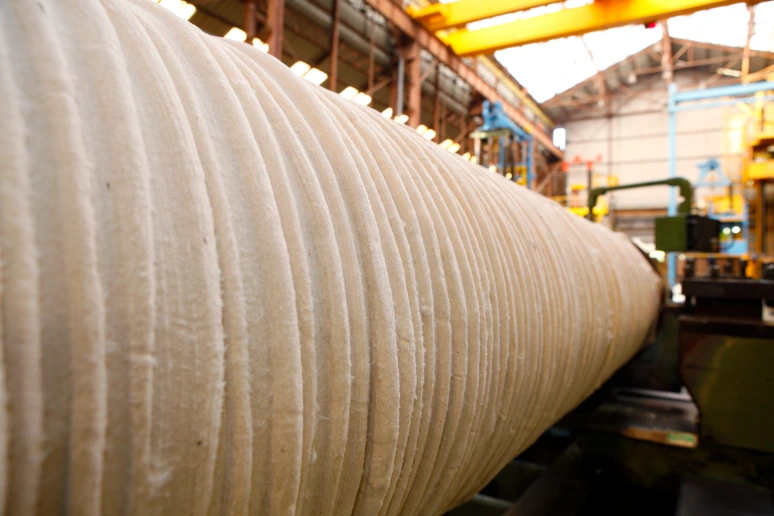
Density profile control
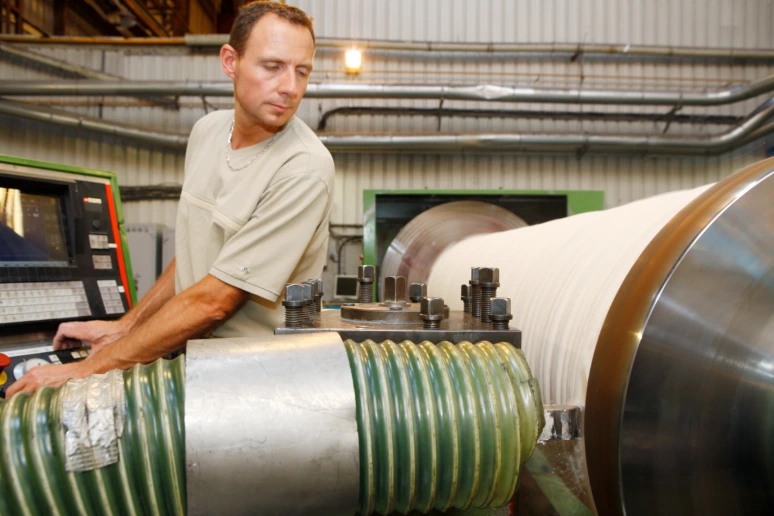
CNC finish turning
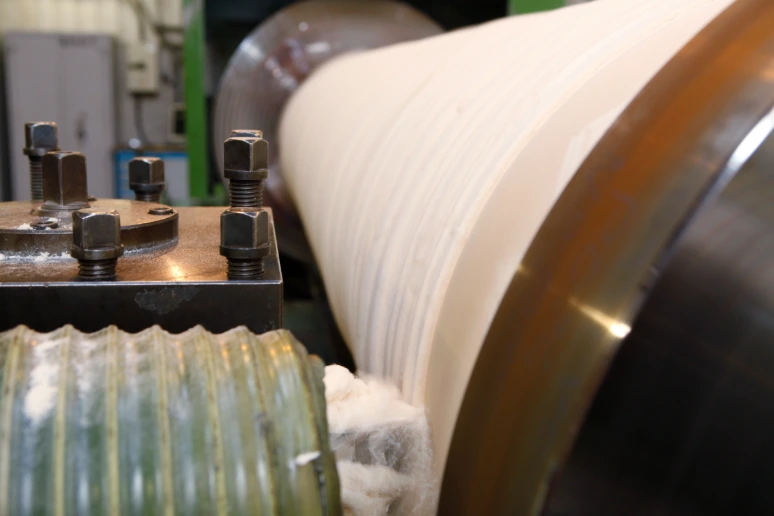
Turning (zoom)
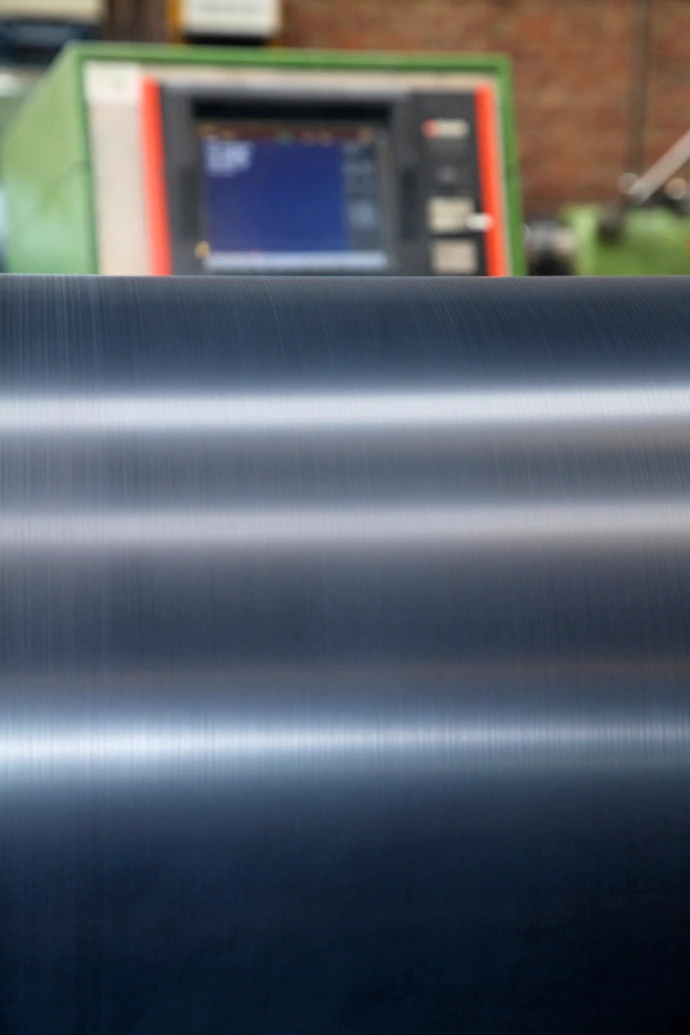
Polishing finish
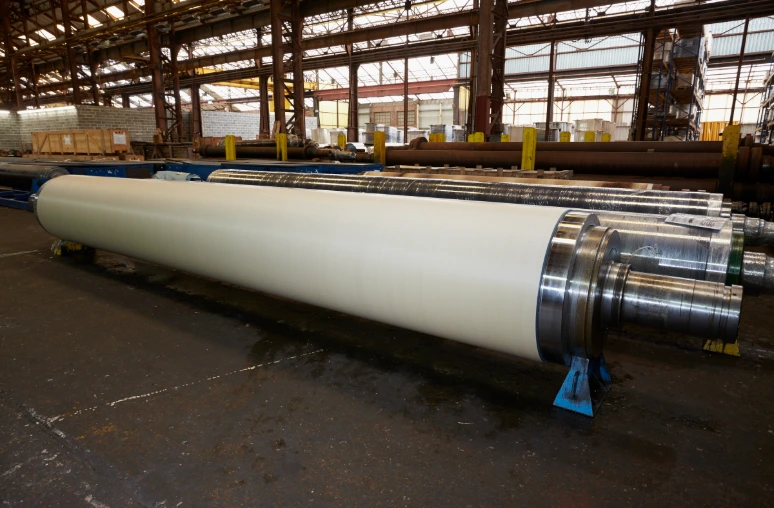
Finished cotton press roll